
 By
By 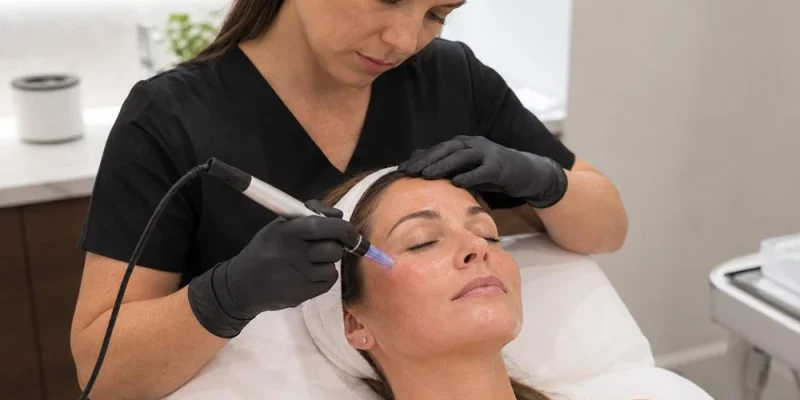
Traditional microneedling uses fine needles to create micro-injuries that stimulate collagen production in the top layers of skin, while RF microneedling adds radiofrequency heat energy delivered through the needles, reaching deeper into the dermis for more significant skin tightening and remodeling. RF generally requires fewer sessions but targets more pronounced concerns.
Both approaches start with the same basic tool, fine needles creating controlled micro-injuries, but adding radiofrequency energy to the mix changes what the treatment can actually accomplish beneath the skin’s surface.
How Traditional Microneedling Works
Both use needles. Only one of them also uses heat to reach deeper.
Traditional microneedling creates tiny, controlled micro-wounds in the skin’s surface using fine needles, prompting the body’s natural healing response to generate new collagen and elastin. This process primarily affects the top layers of skin, making it well suited for milder, more surface-level concerns.
How RF Microneedling Adds Another Layer
RF microneedling uses the same needling mechanism but simultaneously delivers radiofrequency heat energy into the deeper dermal layer through the needles as they create microchannels. This combination of mechanical injury and heat energy enhances collagen remodeling and skin tightening well beyond what needling alone can achieve.
Comparing Treatment Depth
The main difference between the two is depth. Traditional microneedling primarily treats the superficial layers of skin, while RF microneedling’s heat energy can reach the deeper dermal layer, which is what allows it to address more significant skin laxity and structural concerns.
Comparing Sessions and Results Duration
RF microneedling generally requires fewer overall sessions, often around three to four, with results that can last six months or longer. Traditional microneedling typically requires more sessions, often four to six, to achieve comparably noticeable results.
Which Concerns Each Approach Suits Best
Traditional microneedling tends to work well for milder concerns like fine lines, superficial scarring, enlarged pores, and mild sun damage. RF microneedling is generally more effective for more significant issues, including deeper scars, more pronounced wrinkles, and noticeable skin laxity, thanks to its ability to reach the deeper tissue layer.
If you’re deciding between traditional and RF microneedling, board-certified plastic surgeon Dr. Siamak Agha can recommend the right approach for your skin concerns during a consultation in Newport Beach.
Ready to explore microneedling options? Schedule a consultation with board-certified plastic surgeon Dr. Siamak Agha at The One Plastic Surgery Center in Newport Beach to discuss your goals and options.
Results and candidacy vary by patient. A consultation is required to determine your individual suitability for any procedure discussed in this article.
FAQ
What’s the main difference between RF and traditional microneedling? RF microneedling adds radiofrequency heat energy delivered through the needles, reaching the deeper dermal layer, while traditional microneedling primarily treats the skin’s surface.
Which requires fewer sessions, RF or traditional microneedling? RF microneedling generally requires fewer sessions, often three to four, compared to four to six sessions for traditional microneedling.
Is RF microneedling better for deep scars and wrinkles? Yes, its ability to reach the deeper dermal layer makes it generally more effective for significant scarring, pronounced wrinkles, and noticeable skin laxity.
What concerns is traditional microneedling best suited for? It works well for milder concerns like fine lines, superficial scarring, enlarged pores, and mild sun damage.
How long do RF microneedling results last? Results can last six months or longer, depending on the individual and the extent of the concerns treated.






Comments