The Hidden Rhythm of Early Development
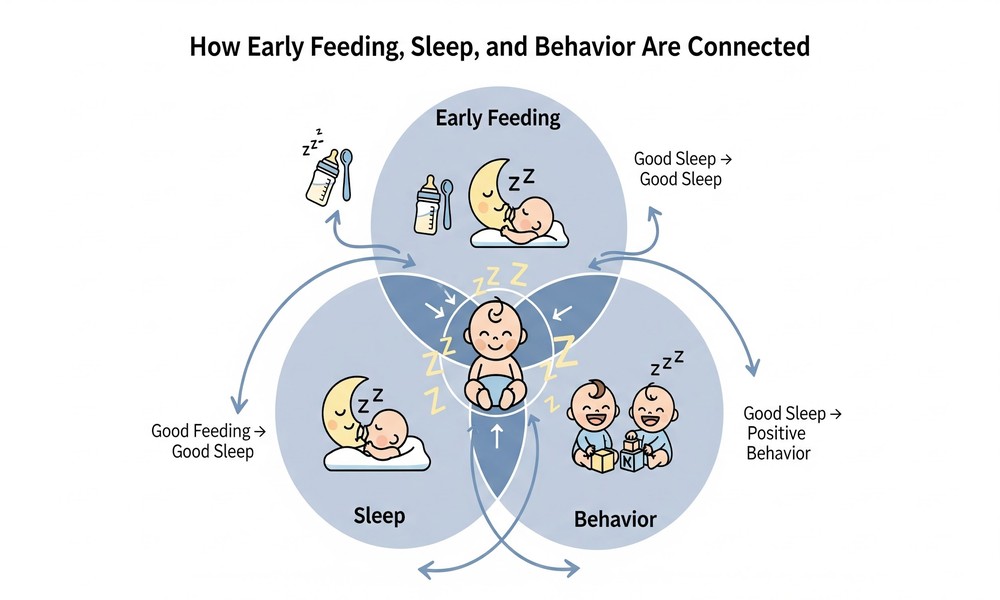
During the first months of life, infants are rapidly adapting to the world outside the womb. Feeding, sleep, and behavior are often treated as separate concerns, yet they are deeply interconnected. A change in one area-such as feeding frequency-can ripple into sleep patterns and emotional regulation. For caregivers, this can be confusing and exhausting, especially when disruptions feel unpredictable.
Early development relies on rhythm. The infant’s nervous system is learning how to regulate hunger, rest, and comfort simultaneously. When feeding routines are inconsistent or misaligned with developmental needs, babies may struggle to settle, sleep for sustained periods, or regulate stress responses.
Understanding how these systems influence one another helps caregivers move away from isolated problem-solving and toward a more holistic approach that supports the child’s overall well-being.
Feeding as the Foundation of Regulation
Feeding is one of the first structured experiences an infant encounters. Beyond nutrition, feeding provides predictability, physical closeness, and neurological cues that shape how babies regulate their bodies. When feeding occurs at developmentally appropriate intervals, it supports blood sugar stability, digestion, and emotional calm.
Support programs such as Corporate Lactation Services (https://corporatelactation.com/), which offer feeding schedule guidance for families, often emphasize that feeding routines are not about rigid timing but about consistency and responsiveness. When infants receive adequate nourishment aligned with their growth stage, they are more likely to transition smoothly between wakefulness and rest.
Establishing a feeding rhythm early can reduce overstimulation, minimize excessive crying, and lay the groundwork for healthier sleep cycles.
The Role of Hunger and Satiety in Sleep Quality
Sleep disruptions in infants are frequently linked to feeding-related factors. Hunger, discomfort from overfeeding, or difficulty digesting can all interfere with an infant’s ability to settle and remain asleep. Babies who wake frequently may not be signaling behavioral issues but rather unmet physiological needs.
During early development, sleep cycles are short and sensitive. Feeding that supports stable energy levels helps babies move through these cycles with less distress. Conversely, irregular feeding can lead to fragmented sleep and increased irritability during waking hours.
Recognizing hunger and satiety cues-rather than relying solely on the clock-allows caregivers to respond more effectively, supporting both nourishment and rest.
Sleep Patterns and Emotional Regulation
Sleep is essential for emotional processing, even in infancy. Babies who are overtired often struggle with self-soothing, leading to heightened fussiness, difficulty feeding, and resistance to sleep. This creates a feedback loop where poor sleep exacerbates feeding challenges and behavioral distress.
Quality sleep supports brain development, memory consolidation, and stress regulation. When infants receive sufficient rest, they are better equipped to engage, feed efficiently, and respond calmly to their environment.
Rather than viewing sleep difficulties as isolated problems, understanding their connection to feeding and daily rhythm can help caregivers address the root causes more compassionately.
When Feeding and Sleep Challenges Require Medical Insight
While many feeding and sleep issues are developmental, some situations warrant medical evaluation. Persistent vomiting, poor weight gain, dehydration, or sudden changes in sleep behavior may signal illness or underlying conditions.
Pediatric-focused urgent care providers, such as Level One Urgent Care, support families by evaluating acute concerns that arise outside routine appointments. Access to all-age medical care can be especially helpful when symptoms escalate quickly or occur after hours.
Medical assessment helps rule out infections, reflux complications, or other issues that may disrupt feeding and sleep, allowing caregivers to respond with greater confidence.
Behavior as Communication in Infancy
Infant behavior is not random-it is communication. Crying, restlessness, and withdrawal often reflect unmet needs rather than willful resistance. When feeding and sleep are misaligned, behavioral cues intensify as babies attempt to express discomfort or overwhelm.
Understanding behavior through a developmental lens reframes challenges as signals rather than problems. This perspective reduces caregiver stress and supports more responsive care strategies.
When caregivers interpret behavior as information, they can adjust routines in ways that support regulation rather than escalate tension.
Early Behavioral Strategies and Developmental Support
As infants grow, patterns in behavior become more visible. Early behavioral strategies focus on consistency, predictability, and supportive responses rather than discipline. These approaches help infants and young children build foundational self-regulation skills.
Providers of developmental and behavioral support, such as Sunshine Advantage, incorporate ABA-informed strategies for children, emphasizing early intervention when patterns of distress or dysregulation persist. While ABA therapy is often associated with older children, its foundational principles-structured routines, reinforcement, and responsive interaction-can inform early caregiving practices.
By applying these evidence-based strategies early, caregivers can help children develop positive behavioral patterns and coping skills that support overall growth. Such approaches work alongside healthy feeding and sleep routines, reinforcing a child’s sense of safety and stability.
Integrating ABA-informed methods into early developmental support allows caregivers to respond proactively to behavioral challenges, laying a foundation for later skill-building and social-emotional growth.
The Long-Term Impact of Early Routines
Early feeding, sleep, and behavioral patterns influence more than infancy. Research suggests that early regulation skills are linked to emotional resilience, attention, and stress management later in childhood. While no routine guarantees outcomes, consistent, responsive care builds a strong developmental foundation.
Caregivers who understand the interconnected nature of these systems are better equipped to adapt as their child grows. Flexibility rooted in awareness allows routines to evolve without losing their stabilizing role.
The goal is not perfection but responsiveness-meeting children where they are while supporting healthy transitions over time.
Supporting Caregivers Through Education and Reassurance
Caregivers often feel pressure to “fix” feeding, sleep, or behavior quickly. Education and reassurance play a crucial role in reducing anxiety and promoting sustainable care practices. When families understand that challenges are often interconnected and temporary, stress levels decrease.
Access to reliable guidance-from lactation consultants, medical providers, and developmental specialists-helps caregivers make informed decisions without feeling isolated. Collaboration across disciplines ensures that concerns are addressed holistically rather than in fragments.
Empowered caregivers are better able to support their child’s development while also caring for their own well-being.
Conclusion: Seeing the Whole Child, Not Just the Schedule
Feeding, sleep, and behavior are not separate systems competing for attention-they are interconnected processes shaping early development. When caregivers recognize how nourishment influences rest, how rest supports regulation, and how behavior communicates needs, care becomes more intuitive and effective.
By approaching early challenges through a whole-child lens, families and healthcare professionals can foster healthier routines, reduce unnecessary stress, and support emotional and physical growth. In the earliest stages of life, balance-not rigidity-is what allows children to thrive.